Friday, March 31, 2006

Content is the key to Mobile TV

Persistently declining voice revenues, exacerbated by the need to pay off expensive 3G licences, mean that operators will seize any opportunity to generate data revenues. Mobile TV and video provides many revenue streams and, with the right content strategies and business models in place, promises to have mass market appeal.

Despite the well-documented convergence that is now taking place in order to facilitate the provision of mobile TV and video services, there is a fundamental difference between the telecoms and television industries; whereas the telecoms industry has been technology-led, the television industry has been content-led. It is becoming apparent that the provision of quality content and the strength of brands will be what drives uptake of mobile TV, rather than technology per se. Although technology is an important enabler, content is what is really important. Mobile operators must adjust their focus to this end.

If players in the value chain do not get their content strategies right, mobile users will simply not be interested in mobile TV. In a nutshell, content must be compelling. This is the core theme of a new management report from Informa Telecoms & Media, which brings together the latest research and current market information from around the world.

SOURCE
Read more!

DoCoMo Tests WiMAX And HSDPA Handovers.

Just as the world starts to catch up with Japan…DoCoMo has applied for a license to test WiMax network (IEEE 802.16e) for its mobile customers. The trial is intended to determine:
–Assess throughput and wireless transmission characteristics according to the distances between a handset and base station, and handset moving speed.
–Verify the optimal wireless parameters and base station allocations to obtain maximum results.
–Assess the possibility of interference from existing satellite communication systems, such as WideStar
–Confirm continuous connections during handover within the WiMAX system or between WiMAX and other systems, such as HSDPA.

SOURCE Read more!

Thursday, March 23, 2006

PayPal for mobile in beta

eBay's online payment service PayPal launched a mobile payment service that includes person-to-person money transfers and "Text To Buy," which allows users to order products through SMS that they see advertised "on a poster, in a magazine, at an event." PayPal's mobile debut has long been expected, but the Text To Buy feature was a surprise to many. To try out PayPal Mobile:

  • Go to PayPal.com and sign in.
  • Add a new phone to your profile and mark it as a mobile.
  • When prompted, confirm that you would like to use it to make payments.
  • Enter a PIN number.
  • An IVR system will call your phone and ask you to type the PIN in.
  • Make payments.

For more information on PayPal Mobile: read this blog

Read more!

3G mobiles 'change social habits'

Increasing use of 3G mobile phones can change the way people communicate and create new social trends and tribes, a behavioural study has suggested.

The study said the combination of still and video cameras on modern phones, and the advent of high speed data transfer, can inspire a generation of users.

Bloggers, film-makers and clubbers all benefit from 3G phones, it said.

Analysts Future Laboratory said the report was the first ethnographic survey of 3G use across the UK.

3G is the next generation of mobile phone technology, offering a wide range of high speed mobile services, including video calling and messaging, e-mail, games, photo messaging and information services.

SOURCE
Read more!

Wednesday, March 22, 2006

Siemens and Nokia Help T-Mobile Build HSDPA Wireless Network

European cell phone giant, T-Mobile, is working together with Siemens and Nokia to enhance its mobile phone network, and speed up 3G mobile data services in Germany and Austria.

Siemens is the main supplier for the project, but Nokia will also be supplying some equipment for the new HSDPA network, which will bring true broadband speeds to mobile phones.

“Starting with Germany and Austria, T-Mobile customers can now use their notebook or mobile phone to surf in the Internet at DSL (digital subscriber line) speeds and download large volumes of data such as movies or large e-mail attachments faster than before,” said Siemens in a statement.

Existing 3G services have failed to generate mass-market interest in Europe, but T-Mobile is hoping that the faster HSDPA network will create more interest in advanced mobile data offerings.

The new network will be up and running by the end of May, with initial data transfer speeds of up to 1.8 Mbps, compared to 384 kbps with the existing technology. Further upgrades should see the T-Mobile network boosted to 3.6 Mbps by the end of the year, and doubled to 7.2 Mbps shortly thereafter.

SOURCE
Read more!

Wednesday, March 15, 2006

UK: Skype and Hutchison 3 Group launch 3G datacard

Skype has struck a deal with Hutchision 3 Group, the 3G mobile operator (UK) last month to provide its VoIP services to the 3 mobile subscribers, which enables the customers to make cheaper VoIP calls.
This service was launched 13th of this month. The new datacard available from £ 39.99. 3 has bundled a special starter pack provided by Skype. The starter pack includes the Skype software, a Skype headset and a Skype starter voucher.
Users hoping to get the card at the cheapest price - £ 39.99 will have to opt for the Web and Office 512 package priced at £45 per month. However users will get half a Gb of data bundled in each month.
The Skype and Hutchison 3 brands compliment each other, representing innovation and high value offerings to consumers. This partnership will enable Hutchison to directly tap into the 75 million people using Skype across the Hutchison territories and promote to them the benefits of using Skype on Hutchison’s networks.

Related News:
Skype news
Silicon.com News article
3G Portal News Read more!

SurfNoise launches mini-ads for mobiles

Voice advertisement company, SurfNoise has launched a mobile marketing service called PocketSpots that will create mini audio commercial campaigns for MP3 players and mobile phones. The company urges clients to keep their ads under 10 seconds long and rely on intrigue for their pitch. PocketSpots charges between $100 and $900 per commercial tag.
Read more!

SurfNoise launches mini-ads for mobiles

Voice advertisement company, SurfNoise has launched a mobile marketing service called PocketSpots that will create mini audio commercial campaigns for MP3 players and mobile phones. The company urges clients to keep their ads under 10 seconds long and rely on intrigue for their pitch. PocketSpots charges between $100 and $900 per commercial tag.
Read more!

Microsoft, Telstra to demo DVB-H in Australia

Microsoft, Telstra and Broadcast Australia will provide the country with a look at DVB-H enabled mobile TV at the Melbourne 2006 Commonwealth Games. The announcement follows Telstra's recent launch of its Big Pond mobile 3G and broadband service. The demo will broadcast seven channels of live coverage of the games. Microsoft will provide specially enabled Windows Mobile handhelds and the content will be broadcast using Windows Media 9 compression. Broadcast Australia will provide the transmission infrastructure. The games were originally called the British Empire Games and include a wide variety of sports.
Read more!

WiMAX to complement 3G/4G networks...

Pioneer Consulting's new report, The Impact of 3G & 4G Wireless Technology on Carriers' Network Development Strategies, concludes that WiMAX will have a significant role to play in the evolution of mobile networks. A survey of manufacturers and network operators indicates that they are making plans to incorporate 4G technology as a value-adding adjunct to existing mobile infrastructure and services.

"WiMAX has received a lot of negative publicity recently," says Julian Rawle, Managing Partner, "but when you look beyond the hype and anti-hype, there is a viable business case for the fixed standard and maybe also for the mobile standard."

Instead of characterizing the evolution of 3G and 4G mobile technologies as a battle to the death between species, the report highlights the potential for complementarity between the various technologies which reside under the 3G and 4G "umbrellas". Pioneer's Managing Partner, Howard Kidorf, commented, "In modeling scenarios for 4G development, we found that accelerated growth in demand for 4G stimulates interest in broadband wireless applications which also has a beneficial impact on demand for 3G."

SOURCE

Read more!

Wednesday, March 08, 2006

SMS Interop Agreements Made Easier

The GSMA has developed a new hub-based structure to support cross network SMS traffic that will make it much easier to set up inter-working agreements between operators and bring on world wide SMS interoperability.

The first proof of concept trial for SMS delivery via a new open hub approach has been successfully completed by Orange, SFR, Proximus and TIM working with hub providers Belgacom and Telecom Italia Sparkle. Next, the GSMA is to launch a large scale SMS ‘hubbing’ trial with a broad range of operators and hub providers.

As the growth and volumes of SMS continues to take operators by surprise, they have been forced to find ways to shortne the time consuming process of setting up bi-lateral inter-working arrangements between each other.

Currently operators must negotiate agreements to exchange SMS between each other one by one. The GSMA’s new structure means operators will only have to connect once to a hub to reach all the other networks connected to that hub. Moreover, through interconnect arrangements between hubs, they will be able to reach operators connected to other hubs. This combined solution ensures that operators and their customers will benefit from the highest level of service quality (including protection against spam), security, billing and settlement while maintaining the independence of each operator to determine its own pricing structures.

Groundbreaking With MMS

The hubbing approach has already been successfully proven globally for MMS with regional hubs established in Asia, North America and Europe linking over 110 operators delivering commercial MMS services in 58 countries. In addition to text messaging, the GSMA is now extending this approach to other key applications.

“Newer entrants will find this simple one-hub-connection an easy way to manage their SMS inter-working traffic and relationships” said Mr. Roberto Vannini, member of the GSMA’s Executive Committee and head of business innovation and technologies at Telecom Italia (formerly TIM Italy).

The main SMS hub providers on the market are Belgacom, Telecom Italia Sparkle, Syniverse Technologies, CITIC and Mobile 365.

READ MORE: SOURCE

Read more!

CeBIT 2006.

CeBIT is all set to start on 9th March 2006. For those who dont know what is CeBIT.
CeBIT is the world's biggest, and one of the world's most important, computer expos. It is held in Hanover, Germany, each spring and is a barometer of information technology.
The name CeBIT stands for Centrum der Büro- und Informationstechnik (Center for office and information technology) and was traditionally the CeBIT part of the Hanover Fair, a big industry trade show held every year. However, in the 1980s the information technology and telecommunications part had grown so big that it was given a separate trade show starting 1986, held four weeks earlier than the Hanover Fair.
So, lets wait for the big event and see what its going to promise for telecommunations/mobile/wireless fields.

CeBIT Website
Read more!

Wednesday, March 01, 2006

Google News Mobile launches in beta

Google launched a mobile version of its Google News service that allows users with Web-enabled handsets to "access top headlines, browse through news categories, or search for exactly the stories you want--all in a phone-friendly format that's easy to read and navigate." Search results are links for relevant stories from "multiple" sources, but only those that are specifically designed for viewing on mobile devices--a move that should prompt many news sites to get with the mobile program. Users of PDAs, smartphones or mobile devices that can view HTML pages can access the entire Google News index of 4,500 sources the same way as the traditional desktop version. The offering is currently in Beta and is only available in English, but Google says the service will expand to other languages soon.

Check the Google News FAQs Read more!

O2 partners with InfoSpace for games over i-mode

InfoSpace has signed a deal with O2 to provide classic British pub games using the i-mode service to U.K. users. The partnership for the "iPub" games channel will include mobile game offerings like Pub Pool, Pub Fruity and Pub darts among others. The site will offer mobile consumers access to InfoSpace's iPub channel on its i-mode site for £3. InfoSpace will collect its revenue from subscription-based services billed directly through the user's phone bill. i-mode is a flexible business model that facilitates both subscription based and non-subscription based content.

The partnership forms part of i-mode's unique content structure through which InfoSpace will be able to quickly develop and deploy sophisticated, secure commercial content to consumers. It allows InfoSpace to expand its revenue opportunities by selling its content through O2's generous revenue sharing model. InfoSpace will collect its revenue from subscription based services billed directly through the user's phone bill permitting it to concentrate on its core business. i-mode is a flexible business model that facilitates both subscription based and non-subscription based content.

InfoSpace runs and manages every aspect of the iPub channel delivered through O2's network. This means that InfoSpace can leverage its extensive experience in the merchandising and promotion of games, music, TV and video to provide consumers with a bespoke "pub" experience.

For more see this press release Read more!

Tuesday, February 28, 2006

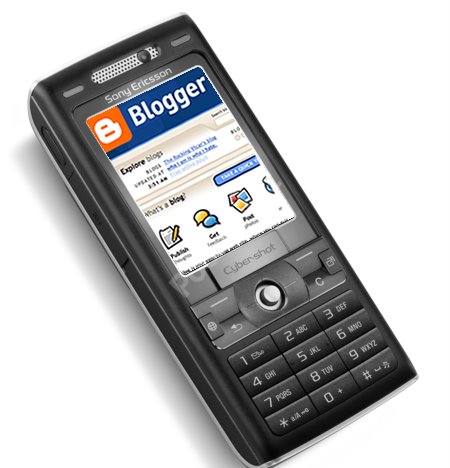
Sony Ericsson to bundle Google's Blogger.com


This week, Sony Ericsson has signed a deal with Google, which enables Sony Ericsson to integrate Google's Blogger.com and Google Web Search features on all of its future mobile phones.

This means blogger.com account holder with the new Sony Ericsson phone can write and post content to his blog on the move using the bundles software. So you can post content to your blog even on a vacation, travel or away from the computer. This is the first any mobile handsent manufacturer providing this kind of features related to blogging. This shows how popular is blogging in the present internet era and it looks like surely this is going to be a hit feature.

"We are seeing exponential growth in blogging and consumers are turning more and more often to the Internet as a means of sharing information or images in personal blogs”, said Jan Wäreby, Corporate Executive Vice President, Head of Sales and Marketing, Sony Ericsson. “By working with Google, we're able to offer a quick and easy way for people users to blog as they discover how convenient it is as a way to share words and pictures with friends, family and beyond. We are also delighted to collaborate with Google, the undisputed leader in Web Search, to provide our end users with relevant internet information directly to their Sony Ericsson handsets."

From now, Google will become the standard search engine for all new Sony Ericsson internet-capable phones. Sony Ericsson is the latest company to announce that it will feature Google software on its handsets.
The announcement comes after Motorola and Vodafone have said that they too would be offering users access to Google Search.

Image and news source: http://www.pocket-lint.co.uk/news.php?newsId=2647


Read more!

Sunday, February 26, 2006

NTT DoCoMo hits 2.5Gbps in 4G trial

NTT DoCoMo says it managed to transmit data at 2.5Gbps to a moving vehicle in recent tests of a new wireless data technology.
The tests involved using MIMO (multiple-input multiple-output) and are part of the Japanese carrier's research into so-called fourth generation (4G) wireless technology. MIMO involves sending data using multiple antennas -- six transmission antennas in the case of the DoCoMo trial -- to increase the total throughput.

The tests involved a vehicle traveling at 20 kilometers per hour (12mph) and took place at the company's research and development center in Yokosuka, Japan, on Dec. 14 last year but were not reported until Thursday.

Last year the carrier reported it had achieved 1Gbps transmission throughput so the latest figures are a significant improvement on that result. In addition to increasing the number of antennas from four to six, the data volume per transmission was also increased from four bits to six bits, said NTT DoCoMo (Profile, Products, Articles).

As a result the frequency spectrum efficiency, which measures how much data can be transmitted in a single Hertz of bandwidth, increased from 10 bits per second per Hertz last time to 25 bits per second per Hertz this time.

2.5Gbps is a very high dataspeed compared to today standards. But 4G is now nowhere visible in the near future, it will take many years before we see this in practical.
Read more!

WiMAX Forum awards 802.16e test contract

WiMAX product certification lab Cetecom Spain and U.K.-based Aeroflex have won a joint contract from the WiMAX Forum to develop the protocol conformance test solution for the 802.16e standard, which will be the basis for Mobile WiMAX.

The companies will market a base station emulator for the protocol conformance testing of mobile stations that will execute ETSI-approved TTCN-3 test cases, the companies said in a statement. Early functionality will be available to support development efforts, and a fully functional system will follow later. The solution will be ready in the second half of 2006, and is expected to be used in the initial certification of Mobile WiMAX products in late 2006, according to Cetecom, which is currently involved in ongoing certification testing for Fixed WiMAX products.

In October 2005, Aeroflex and CETECOM entered into a long-term, global distribution partnership under which Aeroflex became the sole worldwide sales and support channel for Cetecom’s MINT RF conformance test platform for 2G/2.5G/3G mobile handsets.


Read more!

IP Communications Consortium (IPCC) becomes IMS Forum

The International Packet Communications Consortium (IPCC), an international trade association dedicated to the advancement of Voice over Internet Protocol (VoIP) over broadband cable, wireline and wireless technologies, announced its transition to the IMS Forum -- The Voice of IP Convergence.
The mission of the IMS Forum will be to accelerate the adoption of IP Multimedia Subsystems (IMS) by providing an environment for discussion and resolution of real-world implementation issues, such as interoperability and standards-based architectures in the application layer. The Forum will also provide consultancy and expertise to the industry on best practices and approaches for IMS rollouts, interconnectivity and convergence.
“With VoIP proliferation continuing at a very aggressive rate, it has become quite clear that we are going through a major transition toward IP multimedia convergence and are witnessing the dawn of a new era of communications driven by bundled services, applications, multimedia content delivery, and telecommunications convergence,” said Michael Khalilian, chairman and president of the IMS Forum.
The IMS Forum is comprised of service providers, solutions providers, system integrators and government agencies translating industry standards into revenue generating services. Our members develop cost-effective technical frameworks for converged IP services over wireline, cable, 3G, WiFi and WiMAX networks.
Just after few days after the latest buzz about IMS technology buzz at 3GSM world congress, this is an interesting move to watch out for. Lets hope the IMS forum will live upto its mission.
Read more!

Sunday, February 19, 2006

Top stories from the 3GSM, Barcelona - Part 2

  1. More music from O2
  2. Phone SIMs, 3GSM to be integrated in notebooks
  3. China limbers up with 3G licenses
  4. Lucent Selects Ubiquity’s SIP application serve for IPMS
  5. MetaSolv lays out IMS play
  6. Alcatel unveils mobile WiMAX base station
  7. New records in attendance for the 3G World Congress
  8. Rogers Communications selects Ericsson for UMTS/HSDPA in canada
  9. GSMA touts video sharing tests

More music from O2

O2 has been clarifying some of its latest moves in the music space, at 3GSM Barcelona. It also hosted a gig from latest boy band signing – Upper Room.

To more closely identify with its customerbase, O2 has decided to actively sponsor a four piece band from Brighton called Upper Room. They played a live gig to the assembled suits from the 3GSM show in a swish Barcelona nite club last night.

It's hoped the move will trigger more of the UK's youth to actively follow O2's music offerings on both its WAP site (O2 Active) and its i-mode site. O2 recently said it had over 100K users and 130 sites on its i-mode portal.

Head of content management with O2, Graham Riddell, also revealed that O2's recently announced support for the Loudeye platform uses the Beast's DRM technology.

That means you can download the same music track to your mobile phone, your PC and your personal music player. As long as they support Windows Media Player, of course.


====
Phone SIMs, 3GSM to be integrated in notebooks

The GSM Association and chip giant Intel said they will push the standard for notebook machines so that people can connect and roam across mobile networks around the world.

The trade association and Intel are developing reference guides to integrate 3G modems and SIM cards into laptops making it a bit easier to connect if you're out of range of a hotspot.

Every notebook will be SIM ready - according to Rob Conway, the chieftain of the GSM Association. He said that laptops with connectivity to 3GSM will make secure authentication and connection just that bit easier.

====
China limbers up with 3G licenses

China is anticipated to issue 3G licenses by June this year to ensure it has a cutting-edge mobile phone infrastructure in place for the 2008 Beijing Olympics.

This move would generate $12 billion in spending on new equipment, and has been the talk of the 3GSM mobile trade fair in Barcelona this week.

Though China has the pressing deadline of the Olympics, which will mark its high-profile launch onto the world stage, it is keen to push its homegrown 3G mobile communications intellectual property. This standard, TD-SCDMA is still being tested which is why China is being slow to divvy up its 3G licences.

The Chinese government has to decide whether to push ahead with the commercially unproven TD-SCDMA standard, or opt for the European standard WCDMA. There is also the US standard, CDMA 2000.

Some industry watchers believe China will hedge its bets and build networks based on both WCDMA and CDMA 2000, with TD-SCDMA used more for support rather than as a stand-alone system.


====
Lucent Selects Ubiquity’s SIP application serve for IPMS

Lucent Technologies has formally selected Ubiquity’s SIP application server for the vendor’s growing IP Multimedia Subsystem portfolio, agreeing to resell the server to its carrier customers and to further work on integrating the SIP technology with its own architecture. Ubiquity has been working with Lucent, IBM and other vendors and integrators as ecosystem partners, but today’s Lucent announcement is the first time Lucent has agreed to an OEM deal with the vendor.

====
MetaSolv lays out IMS play

MetaSolv Software used the backdrop of the 3GSM World Congress this week to present its strategy for IP multimedia subsystem, or IMS, support in convergent activation and mediation. The company also introduced Mediation 5, a new version of its mediation application designed for multi-service 3G wireless, IP, voice-over-IP and traditional voice networks.

MetaSolv, which was named this week by analyst firm, OSS Observer in its report "Market Share: Global OSS Market Leadership in 19 Segments," as the market leader in service activation and the runner-up in service fulfillment, will position its IMS solutions as those that can achieve the holy grail of automated service delivery.

====
Alcatel unveils mobile WiMAX base station

Alcatel became the first vendor out of the gate with a mobile WiMAX portfolio. At the 3GSM World Congress, it took the cover off of an Evolium base station built to the recently finalized IEEE 802.16e standards.

Though not technically mobile WiMAX, since the WiMAX Forum has not even set a date for the technology’s certification, Evolium is the first product built with an eye toward the upcoming specification. It is not, however, the first 802.16e to hit the market. Korea’s WiBro technology is built under the IEEE’s standards also, and LG and Samsung already have live networks running in Korea and at the 2006 Winter Olympic Games in Turin, Italy.

Alcatel said the base station would be available for commercial deployment in mid-2006. The vendor has been working closely with chipmaker Intel to develop interoperable CPEs and base stations. The two are now planning a co-marketing campaign to commercialize the technology.

====
New records in attendance for the 3G World Congress

The GSM Association said today it has broken new records in attendance for the 3G World Congress after moving the convention from Cannes, France, to Barcelona, Spain, this year. Final attendance figures came in at 50,000 delegates, exhibitors, staff and other participants over the last four days at the Fira de Barcelona convention center. The first day alone saw 34,900 visitors to event, compared to 24,300 at the first day of the Congress in 2005.

====
Rogers Communications selects Ericsson for UMTS/HSDPA in canada

Ericsson said this week that it has been selected to be sole supplier for Rogers Communications UMTS/HSDPA build out in Canada. Rogers is Canada’s largest wireless carrier, and has used Ericsson as its primary supplier for its wireless infrastructure, while many other Canadian carriers have used homegrown vendor Nortel Networks.

====
GSMA touts video sharing tests

The GSM Association (GSMA), in an initiative led by Scandinavian mobile operator TeliaSonera, has begun interoperability trials on three continents to ensure that mobile users will be able to share video across networks. Successful completion of the trials, taking place in Europe, Asia and the U.S., will ensure that video sharing services work smoothly across networks and national boundaries, the GSMA said at the 3GSM World Congress here.

The GSMA has brought together major equipment and handset-makers, including Ericsson, LG, Lucent, Motorola, Nokia, NEC, Samsung, Siemens and Sony-Ericsson, for the trials to ensure that this service will work across as many mobile devices as possible. Intel Corp. and other firms also are participating in the trials.
Read more!

Tuesday, February 14, 2006

Top stories from the first 2 days of 3GSM, Barcelona.

1. Mobile operators promise IM for all
2. Nokia merges its cdmaOne business with Sanyo
3. BenQ EF91 HSDPA handset announced
4. Nokia and Vodafone team to promote S60
5. Cingular announces global 3G roaming
6. Nokia unveils wi-fi phone for mass market
7. Skype gets serious with three deals
8. Nokia scores global IMS deal with Vodafone

For details read below:

Mobile operators promise IM for all
Fifteen of the world's largest mobile phone operators, including Orange, T-Mobile and Vodafone, have signed a deal to include common standards for instant messaging (IM) interoperability.
The deal, which consists of 32 letters of intent, will see common IM protocols shared between operators so that customers from their networks can chat using IM. The services will also be strengthened to limit the effects of spam and virus attacks.

"Thanks to this coordinated IM campaign, more than 700 million mobile subscribers will eventually have access to an IM service that is intuitive, reliable, secure and will work across networks," said Rob Conway, chief executive of the GSM Association.
"Crucially, users will only pay to send, not receive, messages, meaning that they can easily control their spending and minimise spam."

The 'Personal IM' service was launched at a combined press conference at 3GSM in Barcelona. India will be the first country to benefit from the service, since the majority of its mobile operators have signed up.

Nokia merges its cdmaOne business with Sanyo
It Seems that Nokia has got bored playing in the cdmaOne handset business and has found a way out. It's going to merge its cdmaOne handset business with that of Japan's Sanyo. Hopefully to create a new dominant player.
That's exactly what Sony and Ericsson thought they were doing with their GSM handset divisions when they combined to form Sony Ericsson.It didn't quite work like that – the original Sony Ericsson joint venture lost market share like mad before making a successful recovery. That's probably what will happen with the new Nokia Sanyo venture.

Common sense would dictate that the new venture should still be called Nokia, though, because of the brand. But we shall see. It's a clear indication that the economies of scale are retreating when it comes to making cdmaOne and CDMA2000 handsets, however.

BenQ EF91 HSDPA handset announced
BenQ announced its first HSDPA phone at 3GSM, the EF91. The company is calling it the first HSDPA phone, but both LG and Samsung were showing off HSDPA equipped phones at CES. Discounting the claim, the EF91 is still quite a high-end handset:

* 3.2 megapixel camera with autofocus
* miniSD card slot
* QVGA screen with 262K colors
* Bluetooth with support for stereo headsets
* HSDPA with video call support

The BenQ EF91 is scheduled to begin shipping this summer. Prices will vary by local.
BenQ announced another handset at the show, a music phone called the EF51.

Nokia and Vodafone team to promote S60
Nokia and Vodafone this morning announced a partnership to increase the adoption of the S60 phone platform. By making more Vodafone handsets S60 the carrier will have an easier time making the customizations and value adds that carriers love.

Nokia and Vodafone will develop a Vodafone-specific software complement on top of the S60 platform. The collaboration also includes the expansion of the licensee base and increased portfolio penetration through open roadmap governance and establishes a strong independent brand position for both the S60 software and the supporting developer activities.

By the end of February, Nokia estimates that it will have sold 50 million S60 devices. Vodafone is the world's second largest mobile phone carrier with approximately 180 million customers across five continents (China Mobile is the largest with over 200m customers).

Cingular announces global 3G roaming
Cingular Wireless announced a global 3G data plan aimed at business travelers. Starting next month Cingular will offer a GlobalConnect data plan that features unlimited domestic use and up to 100MB/month of usage on partners' networks in Europe and Asia.A data card (Option GlobeTrotter GT MAX LaptopConnect card) is bundled and it operates on the following networks: HSDPA, UMTS, EDGE, WiFi and GPRS. The card costs $99 with a 2-year service contract.

Nokia unveils wi-fi phone for mass market
The world's largest mobile handset manufacturer, Nokia, on Monday unveiled a mass-market phone capable of switching between wi-fi and GSM. The N6136 handset, launched at the 3GSM World Congress in Barcelona, is a UMA device that will let users make voice over IP (VoIP) calls when the phone detects a wi-fi hotspot. It is thought the emergence of such devices will encourage operators to roll-out high-bandwidth services: wi-fi, in theory, can support speeds of up to 50Mbps."Internet voice is going mobile," said Jorma Ollila, Nokia's chief executive. "UMA gives users an alternative to PC-based VoIP," he added.

Skype gets serious with three deals
The darling of the Voice over IP (VoIP) revolution, Skype, announced a deal with Hutchison 3 today that will put the consumer application on Skype-enabled mobile devices.It also announced Skype for Pocket PC 2.0 which will allow users to talk to other Skype users - or Skypers - with any Windows Mobile Pocket PC wireless device.Finally, Skype announced a new distribution and retail programme with Dangaard Telecom that intends to release "a huge new retail presence in Europe for Skype certified products."

Nokia scores global IMS deal with Vodafone
Finnish vendor Nokia, today revealed it has won a contract with the Vodafone Group to deliver its IP Multimedia Subsystem (IMS) to Vodafone operations worldwide.Under the agreement, Nokia will become preferred supplier of Vodafone's IMS network architecture and Session Initiation Protocol (SIP) technology that will enable Vodafone to roll out next generation services, such as Presence, List Management services and VoIP. The first deployments of IMS are expected during 2006, Nokia said.
Read more!